
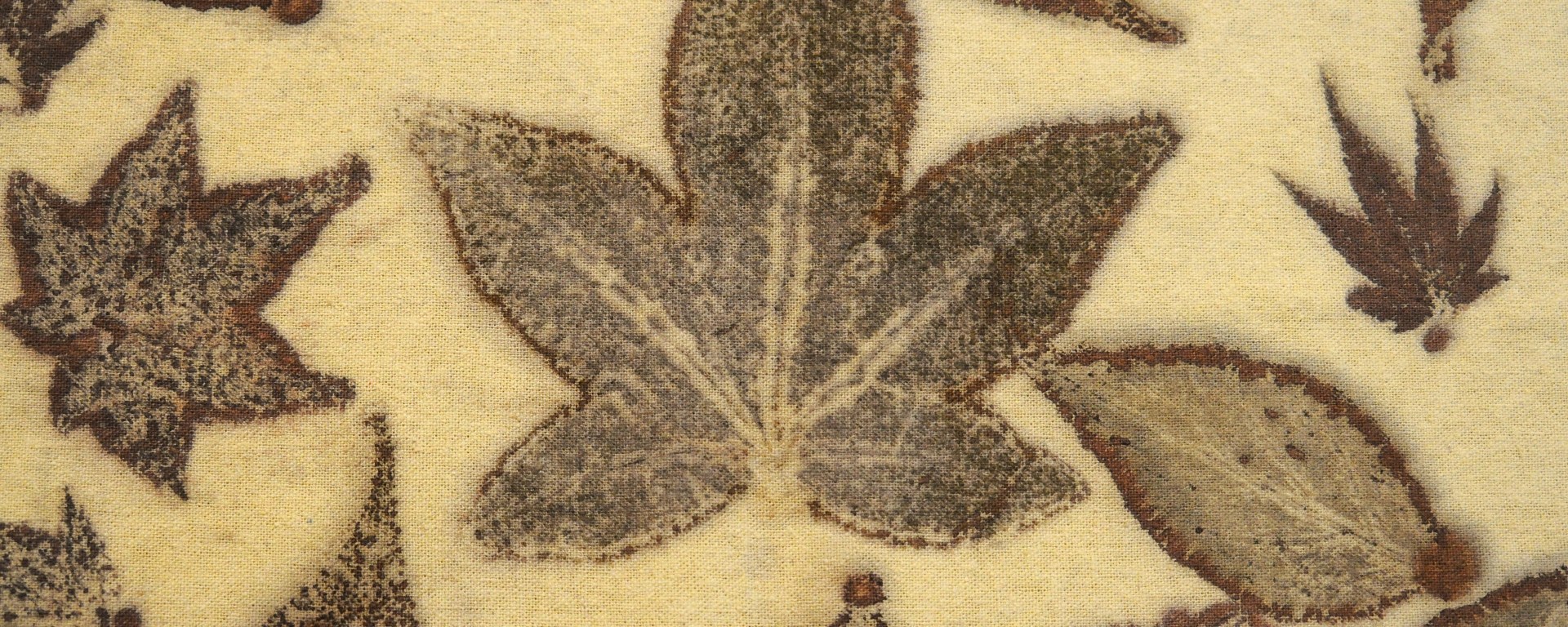
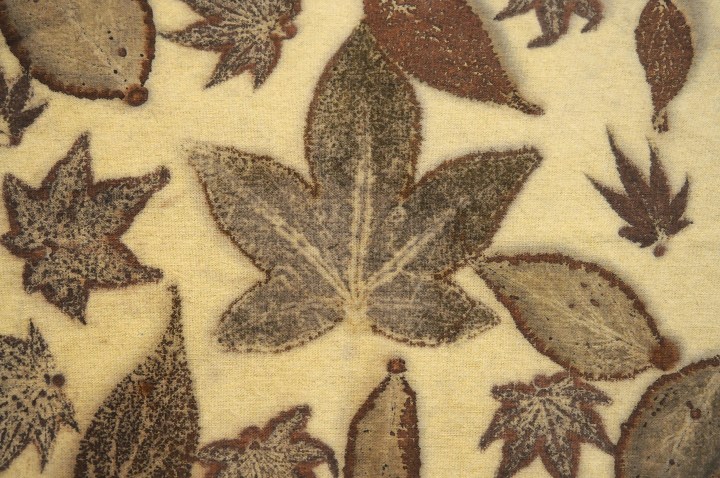
Yesterday I scratched an itch that’s been growing lately to create something tactile. A few weeks ago I enrolled in an eco-printing class (textile art felt safest to me) with artist Susan Kranyik at The ArtWorks™ near downtown Wilmington, a fantastic collection of artist studio spaces with an adjacent gallery. One thing and another conspired to keep the class from happening, but finally the planets aligned and we scheduled a time. I say class, but in reality it was a one-on-one session in Susan’s studio space.
I warned her she was dealing with a non-artist whose capacity for patience was limited. She waved me off and assured me I could do it, and I think I did, mainly. I definitely screwed up some, made some rookie mistakes, and spent too much time gabbing and not enough listening.
Here are the basic steps we followed to create the prints:
- Prepared an iron bath using a small amount of ferrous sulfate granules mixed into a plastic tub filled with warm water, which begins to turn pale orange almost instantly (once it’s a concentrated orange, it is no bueno, and must be discarded).
- Layered a small fabric sample over plastic sheeting and then dampened the fabric slightly with water using a misting sprayer.
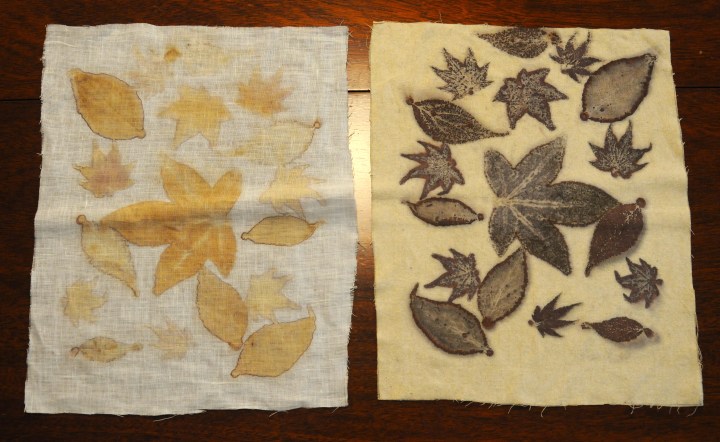
- Created a composition using organic materials (leaves must have tannin in order to transfer to the fabric, Susan explained). She had prepared for me a mix of Japanese maple, oak, eucalyptus, and sweet gum leaves, and a couple other species, along with tiny eucalyptus seed pods.
- Soaked the ‘blanket’ (a heavier cotton fabric similar to muslin) in the iron bath for fifteen seconds, and then squeezed out the excess.
- Applied the blanket to the top, and then using a wood dowel, rolled up the entire business, including the plastic, by pulling the dowel whilst shoving a heavy weight across the top of the layers (note: this requires a highly technical tool—an oblong box of soda cans wrapped in duct tape, in this instance Barbie-themed duct tape, and yes such a thing exists).
- Secured each end of the dowel with rubber bands before plunking it into a steamer, there to cook for an hour—Susan uses a massive turkey roaster for this bit.
After steaming the dowels, Susan plucked them out with tongs (they are quite hot) before removing the plastic with scissors, and then allowed me to peel back the blanket to admire my handiwork (“like Christmas morning,” she quipped).
We enjoyed much happy conversation while we waited on the prints to finish steaming, and Susan shared some tips to allow me to do this at home if I wish (possible with only a few basic supplies, and she suggested achieving the steaming bit in the back of my car on a hot day at the beach—brilliant!). She also shoved this gorgeous book into my hands to paw through while she was fussing with supplies and such. Australian author India Flint is the grande dame of eco printing, explained Susan.
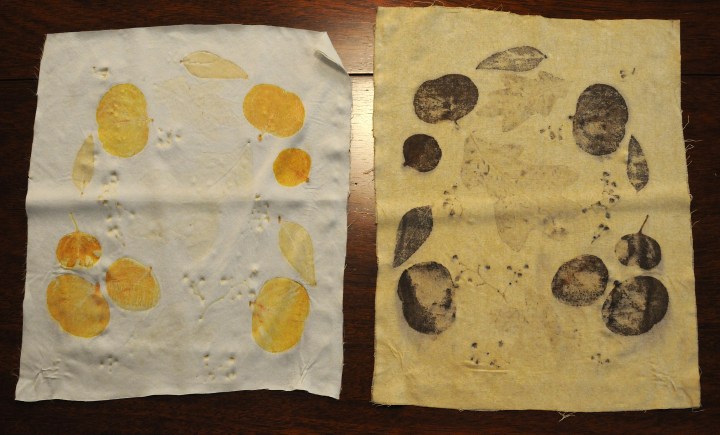
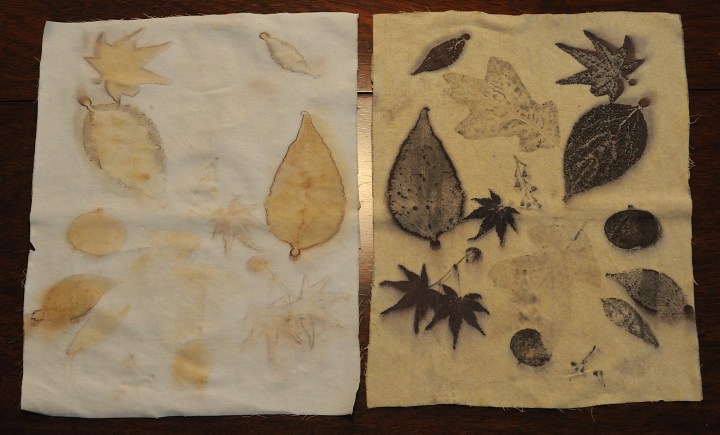
I was in love with the eucalyptus pods, but I’m not sure the feeling was mutual. As you can see in the image, the oak leaves didn’t transfer well to the silk, and I suspect the pods may have created too much space between the fabric and the blanket. Susan suggested a couple fixes for this and I may try one or both:
- I can choose a color I like (pale blue seemed a good option) and dye the whole thing, which will make the ghost-like leaves show up better (the caveat, she said, is the bright orange eucalyptus leaves will change when the fabric is dyed)
- I can stretch the fabric in an embroidery hoop and run stitching around the stem and outside of the leaves
Meanwhile, I love the iron blankets most for their sepia tones and bold, almost black organic prints. I have a plan for those: I will stretch each one over a piece of foam board and then frame them, so I’ll end up with a ‘triptych’-like arrangement.
In the end, I achieved my objective to get outside my limited bubble and interact with another person in three dimensions, and to learn how to make something pretty. Before I left, Susan strolled through some of the building with me and we stopped in one artist’s photo gallery to admire his work. She also corrected me: You are an artist, she insisted, after we’d picked apart my past in music and dance and my life now in writing.
It’s a reassuring thing to hear, especially on days when you’re not entirely sure what you are anymore.
My next idea: collage. I knew all those back issues of New Yorker magazines would be good for something, eventually.
 Carolina Thinklings