
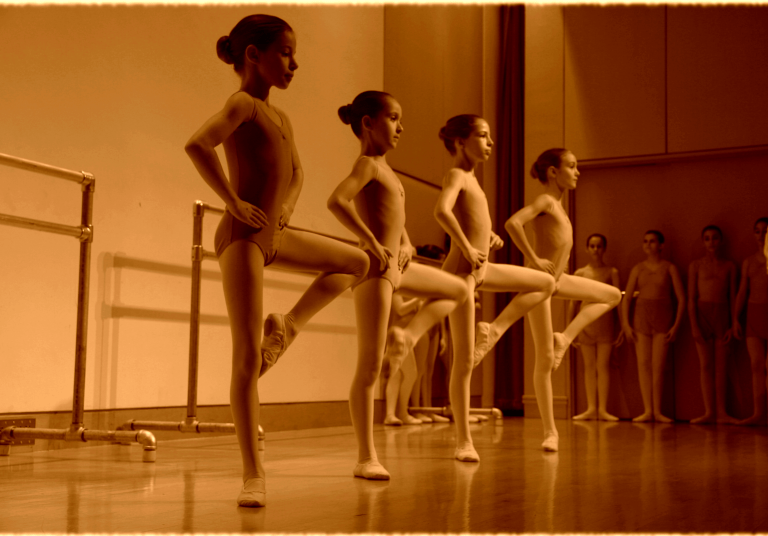
The surly flight attendant held the small black mic to her lips and advised us to keep our seatbelts fastened while the plane taxied to the gate. Nobody in their right mind would challenge this humorless woman.
A moment earlier my heart jumped when our plane seemed to descend not toward a reassuring paved runway, but instead into the East River; from my seat I could easily make out the choppy movement in the opaque green water on our approach. A minute later we were on terra firma, taxiing as promised.
Welcome to LaGuardia, my seatmates parodied sarcastically in an affected Brooklyn accent. They were a well-heeled pair, a mother and teenage daughter, who had chatted amiably with me earlier in the flight. I told them I was traveling to New York alone, for the first time, to attend pedagogy training at American Ballet Theatre, and was terrified. This association signaled to them that I was somehow their people. “When we deplane,” explained the older, “just stick with us. We’ll show you exactly where to go and what to do.” Instantly I could breathe normally again and felt my shoulders shrink away from my ears, just a little.
Terrified to travel alone to NYC, yes, but I was also beside myself with excitement. My erstwhile performing arts school roommate had convinced me this was a trip worth making, worth the financial and emotional burden, despite my long absence from the ballet world. In fact, this entire undertaking—founding a small, private ballet school in Knoxville well into my forties—had been so unlikely and maybe even a bit idiotic. The leap from full-time parenting a difficult kid to opening the school had unfolded quickly after the seed germinated in our local ice rink, where my third-grader was a rink rat and I had somehow been pressed into service teaching a Saturday morning ballet class. By late fall of 2005 I had signed a lease for my own space nearby and by the following April, Knoxville Ballet School was open and enrolling students for a slightly truncated first spring term.
Now, two years into this new adventure, here I was at the epicenter of the ballet world, about to meet the driver who would take me to a small apartment in the Flatiron District I’d call home for the next ten days. This was not what many would consider a conventional trajectory to elite training in classical ballet pedagogy, and in fact was a skosh bass-ackwards in truth. But about the same time I opened the school, American Ballet Theatre had announced a new training curriculum for teachers, via its Jacqueline Kennedy Onassis School. The goal of the NTC—the National Training Curriculum—had been to give instructors much-needed guardrails for teaching strong classical technique, safely, to new generations of dancers. Elements of the French, Italian, Russian, and Danish schools all found their way into this training, which incorporated dance medicine and behavioral expertise to keep the health and well-being of the child front and center. It was the most sensible approach to ballet training I’d ever seen.
So I really couldn’t afford not to be here, and was lucky enough to belong to only the second cohort of teachers outside of ABT itself, since the training was introduced.
At a time when Craigslist was well on its way to earning a reputation for sleaze, I took a chance on it and found reasonably comfy and affordable digs on Park Avenue, just around the corner from ABT’s home at 890 Broadway. I could step outside my door and walk to ballet school in under five minutes, without a mandate to learn the subway or hail a cab. I had wanted this, living in a flat for a few days, for a more authentic NYC experience. I wanted to go to the grocery store and prep my own meals at home. I wanted to retreat to the sofa with my laptop in the evenings and reorganize my thoughts and notes from the grueling eight-hour days, and then turn in early. I was not here as a tourist.
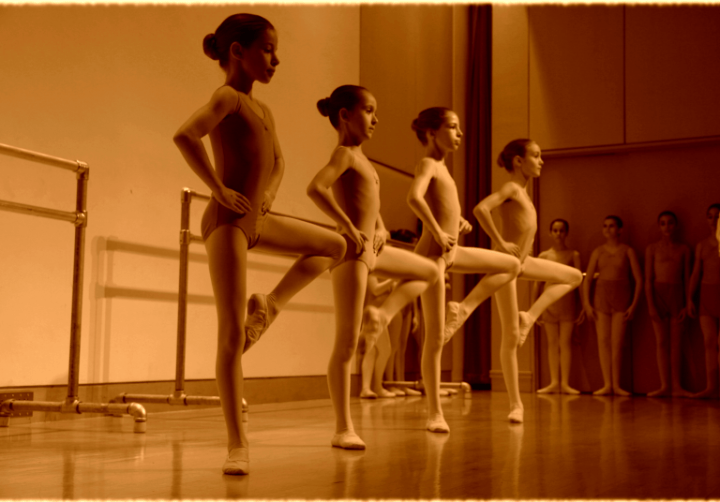
My friend had given me an inkling of what to expect, but I still brought every nerve with me intact. On the first early morning I dodged an embarrassment of tiny people—a couple hundred of them queued up outside the front door at 890 Broadway and continuing around the corner, all the way down the long side of the block, children enrolled in the Young Dancer Summer Workshop whose classes we teachers would observe as part of our own training. I filed past all the tidy, clean-scrubbed kids with their hair already neatly in place, their shorts pulled on over tights rolled up around ankles to accommodate flip-flops in the summer heat, a colorful rainbow of leotards and dance bags, a wiggling snake of grins and giggles. Their own nervous energy mirrored mine and made my pulse race faster.
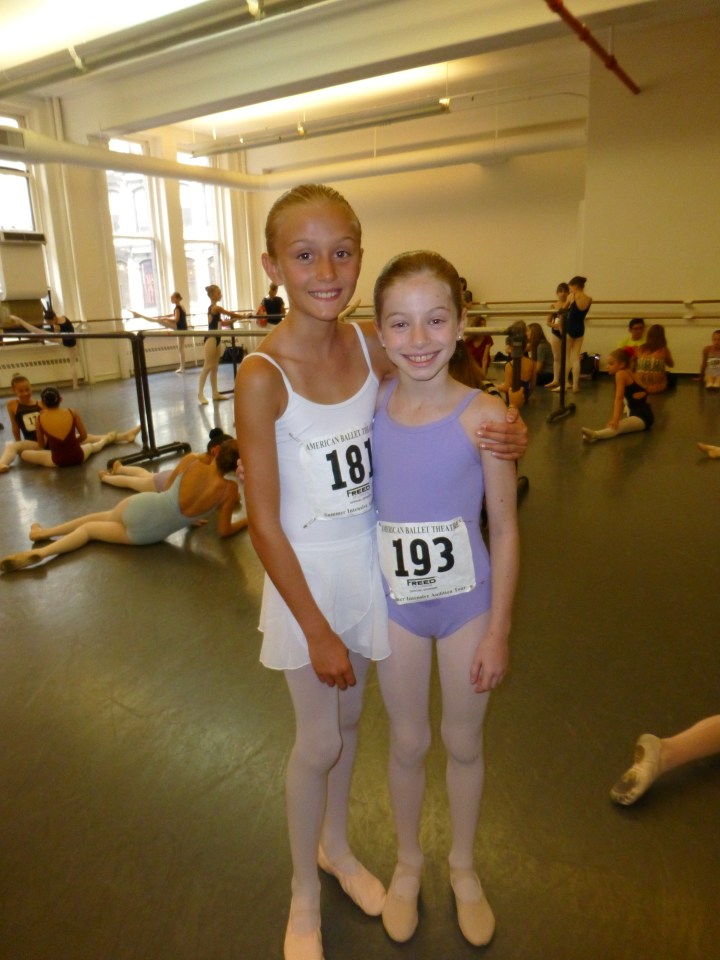
Security guards at a small podium inside the front door admitted the teachers ahead of the kids and their parents. Up we rode inside packed elevator cars, one after another, to the fourth floor, where our mentor and co-creator of the curriculum, Raymond Lukens, would deliver lectures in an enormous, somewhat beleaguered ballet studio classroom, flanked by a pair of retired professional ballerina assistants.
The instant my colleagues and I stepped out of the elevator and into the fourth-floor hallway, I felt a surprising but unmistakable sensation: I had arrived home.
This is an elusive phenomenon to explain except to say, when you grow up immersed in this world as I did, you recognize it instantly when you return to its multi-sensory landscape. And here it was. This was finally the thing to fully impart a sense of calm and allow me to focus.
On the first morning we were handed a laminated nametag and a massive binder filled with solid gold, the vocabulary and methodology we would soon take home to our own schools. Inside our classroom, the ancient window air conditioners struggled to keep apace with the August heat and humidity; 100 or so metal folding chairs clanked and groaned. At one end of the room a catering company was putting finishing touches on a sprawling buffet with hot coffee and tea and piled high with pastries and other nibbles.
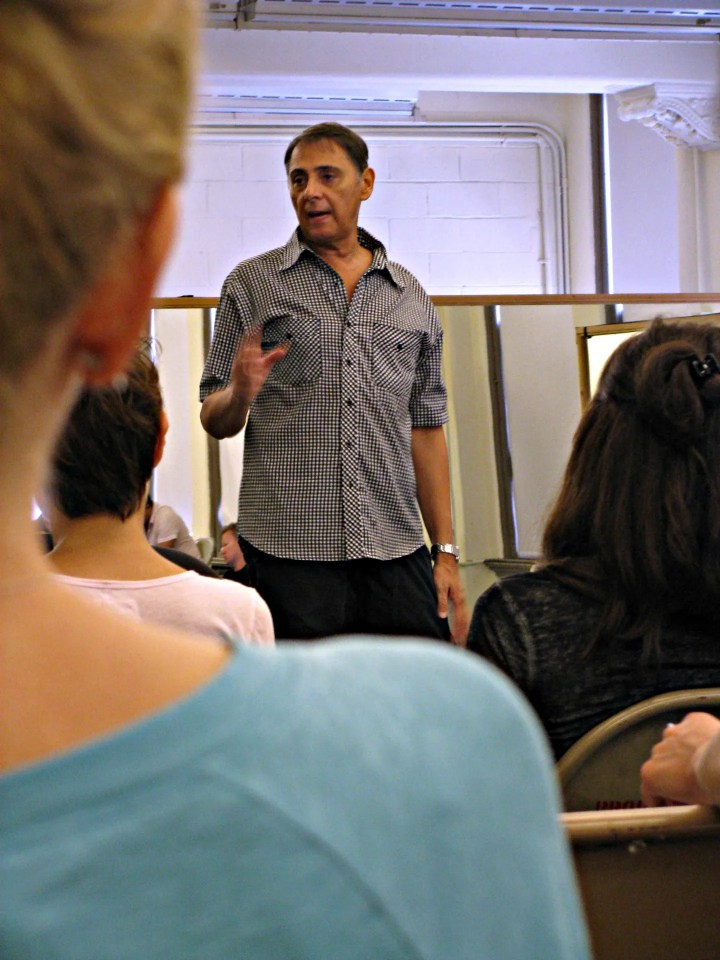
Raymond had been visiting with teachers and colleagues and finally took up his seat at the front of the classroom, attached a tiny mic to his T-shirt collar, and bellowed THIS IS THE VOICE OF GOD, a signal it was time to settle down and begin. Everyone laughed in unison, a phenomenon we would repeat often in the coming days, as we learned our mentor had not only an encyclopedic knowledge of this ancient art form but also a well-developed sense of humor with impeccable timing. This was going to be fun.
There was a seriousness, too, and a hush fell over us all as we opened our binders and powered up laptops and tablets or pulled out pens and paper. The entire business spoke to my love of academia, of books and learning, underscoring the sensation of knowing I was exactly where I was supposed to be. My purpose was well defined: I was here not so much to chase a dream as to return home with an extraordinary product for my small ballet community, growing us from what started as a fun experiment into a serious training facility for young dancers.
Returning to Knoxville, Restored
It was a trip I’d repeat several times by the year 2014, when I was living and teaching ballet at another school in New England. This first leg of the training, though, had been the most grounding and centering for me. I already knew I wanted to offer something truly exceptional for Knoxville, and now here it was, right on cue.
I watched the familiar Appalachian foothills come closer as the plane banked and prepared to land at McGhee Tyson airport, the same foothills my ancestors had made their home generations earlier. Now, serendipitously following in my ballerina mom’s footsteps, I had a firm plan in place for the upcoming fall term and could not be more energized to roll out and explain the new curriculum to my growing population of ballet families. From Saturday morning ballet class in a smelly hockey changing room to a new school with a brilliant curriculum developed by the people at the pinnacle of the art form at American Ballet Theatre—this had been quite some journey.
And it got better. By the end of the first academic year of classes, I made the bold decision to take my kids through the rigorous ABT examinations. This was not a requirement of the teaching certification, but doing the exams meant ABT would send an adjudicator to my small school and then we’d achieve Affiliate status.
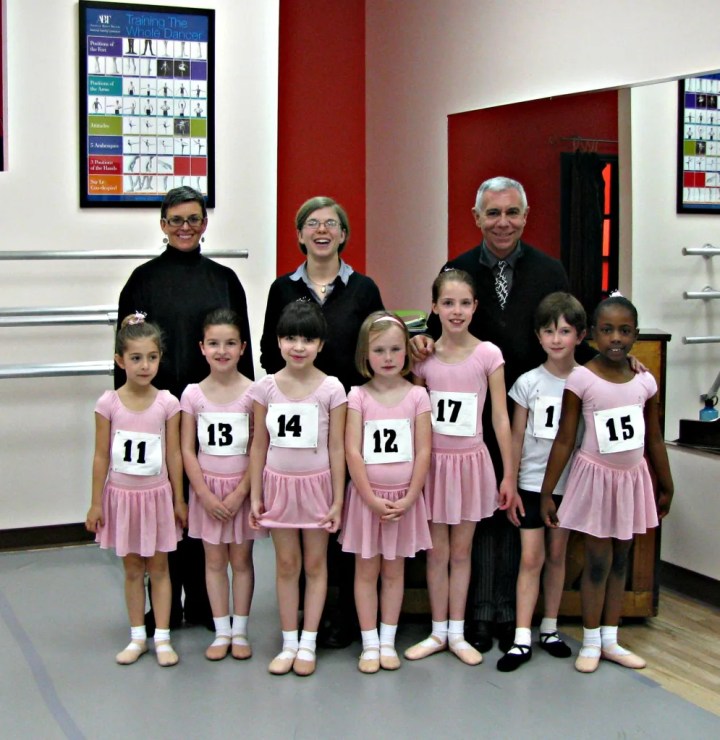
Why should I pay an extra $50 fee for my child to do this? came the questions, fast and furious. I was in the hot seat and in short order brought the answer into crystalline focus: Because doing these exams in the presence of American Ballet Theatre via Franco De Vita should reassure you that your young dancer is in good hands—and that should mean a great deal to you as a parent. This ethos was a defining one for the school, and I think served to separate consumers who did not understand the product from those who emphatically did.
In essence it became my mantra, and made Knoxville Ballet School stand out as a beacon of serious classical ballet training. That spring, ABT sent Raymond’s NTC co-creator and partner Franco De Vita to adjudicate our exams. My young students performed well enough. But the second year, when Franco returned, the kids blew the tops off their exams. Later Raymond himself told me Franco could not believe the difference just one year made in my students, a testament to the two of them and the caliber of the curriculum.
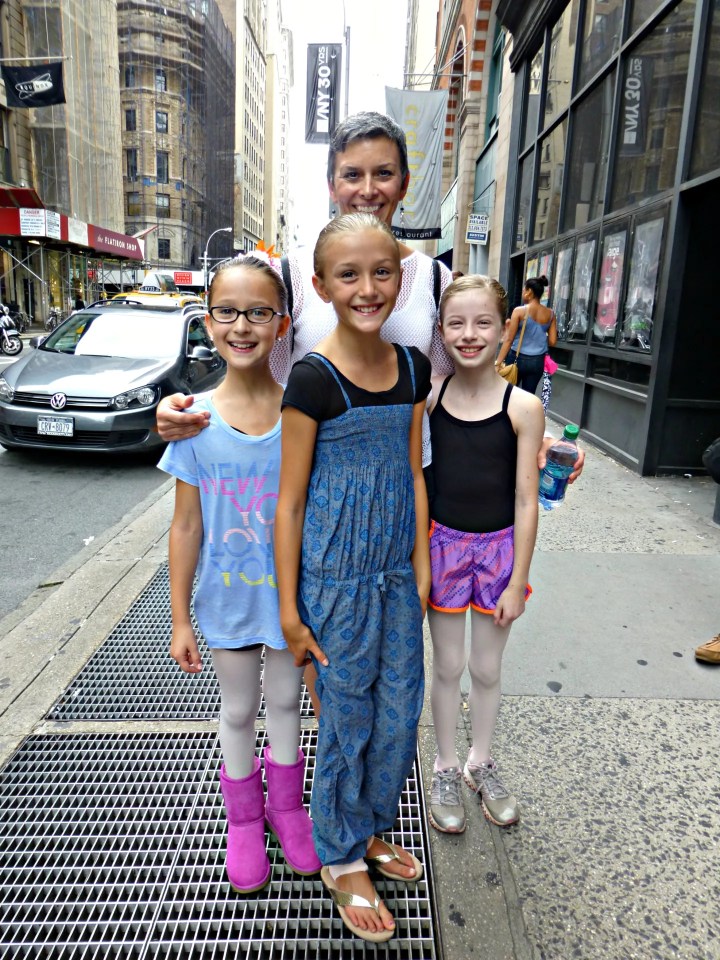
In the final year of the school’s too-short existence, 2012, three of my own students joined that long line on the sidewalk outside 890 Broadway as enrollees in the Young Dancer Summer Workshop. I arrived to see them on August 10th, my 50th birthday, in their classes and final workshop performance. It marked the end of my Knoxville chapter but also helped me understand what I built was a good, valuable, and meaningful gift for the community there.
It also helped me see that on that hot day in August when I first landed at LaGuardia, I was arriving not in New York, but somewhere I’d been headed for a long time.
***
Nota bene: I’ve written about this chapter before and likely will again. It reveals new meaning with the passage of time.
 Carolina Thinklings
What a wonderful journey! As a child who was enrolled in ballet classes, I wish my instructor had that kind of commitment and curriculum guidance! Maybe then I’d have stayed with it…
LikeLike