


Cross the Mason-Dixon line driving north through Virginia (and a small, weirdo finger of West Virginia) and you enter Pennsylvania’s topographically interesting southern reaches, with the Appalachians all around, and the northernmost outpost of Krispy Kreme Donuts in Scranton, home of the fictitious and also delicious Dunder Mifflin. It is what we did Monday afternoon, arriving at Fallen Tree Farm near Carlisle well before nightfall after a pleasantly sunny and uneventful day of driving.
Might be Scout-the-Goldapeake-Retriever’s last hurrah. We decided we owed him this ambitious two-week adventure that began on Labor Day and ends in our driveway next Friday. At home, our little hell-on-wheels hound Henry has made a new friend with whom he appears thoroughly smitten. Not only is she making sure he sticks to his schedule, but she is a runner, and so is wearing out his little canine ass in our absence. This is perfection.
Meanwhile we road warriors made a promise to ourselves this time we’d steer clear of bad corporate hotels if possible. The trick is finding an appealing place to hang your hat next to your dog’s leash for a night. The Chef is nothing if not patient and sniffed out one such place in Carlisle, our first stop. Fallen Tree Farm is not bad at all. In fact it is a historical and architectural gold mine—David might’ve outdone himself. Being the consummate student of vernacular historical architecture, I found myself longing to stay for days, if for no other reason than to explore the ruins of the 18th-century barn opposite the 18th-century house.
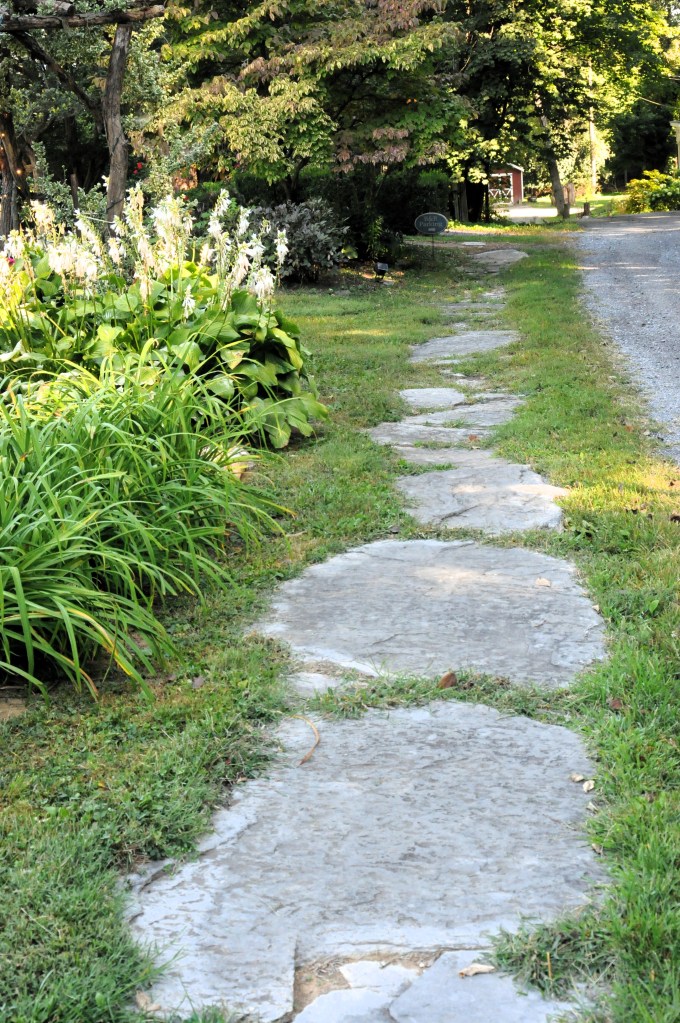
Yes, I said 18th century. We slept in a room, walked around in our bare feet on the floor, that was built as early as 1750. This is questionable, I admit. What appears certain is the oldest part of the house was indeed built before the turn of the century, and people were living in it. Wigged and bonneted people, one imagines.
It is not the best example of historical preservation, but seems aligned fairly well with the approach individual property owners have taken to building and remodeling on this property through the centuries (centuries!). Here is an example of the train wreck.

Bless their hearts. Almost all of this telescoping jumble of architecture is historical. Nobody was around to say, eh, excuse me, but you might want to rethink your design choice there, and so the result is this fantastic display of vernacular architecture through time, all smashed together, in situ, in one house. Of all of it, the most endearing detail is possibly the cupola-as-afterthought. Like the builder said, hey, let’s add a cupola! Over nothing! We can say the house has a cupola! So there it hangs, proudly, over a small second-story porch.

Don’t get me wrong. I love this place. The proprietors are friendly and accommodating and we were comfortable and well fed during our brief stay. Our room was in the original house, built of stone. I’ve seen it described as a ‘gentleman’s house’ and I suppose it was for the time. The mansard roof was added during a later building phase for more square footage one presumes; in its earliest guise the house also would not likely have had a two-story porch as exists today. Later additions reflected the whims of the time, including the American fascination with all things Victorian.
To me, though, the most enchanting building on the grounds here is no longer a building, but instead ruins of the barn that once stood directly opposite the house. It was destroyed not by fire, as one might have assumed, but tragically by an unfortunate owner in the 1960s who dismantled and sold it to an interested party.

All that remains now are the original stone foundation walls, and physical evidence of multiple building periods through time, as we can see in the house. I walked around in the coolness of the early morning with my camera to make photos of this space that would be an archaeologist’s dream. The brick pavers are a later addition; those bricks specifically were possibly never meant to use as pavers but as building bricks. A quick web search tells you about the company, founded in the 19th century but closed by the mid-20th (it stands in its own ruins, still, in Illinois). Purington in fact was renowned for its pavers, but stamped the word ‘paver’ onto those eponymous bricks.
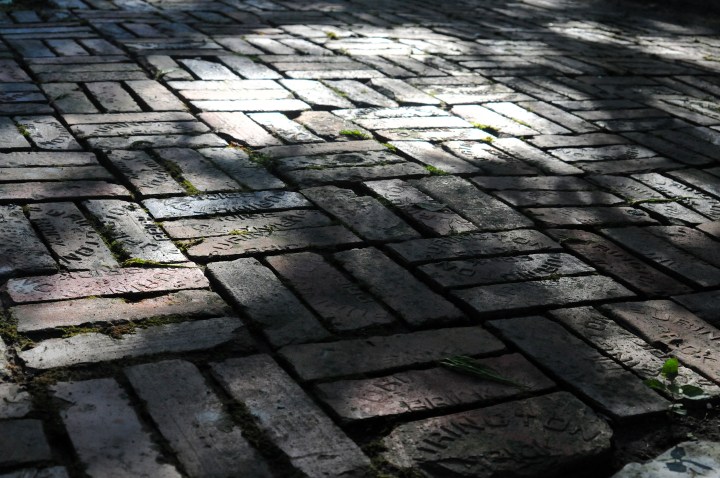


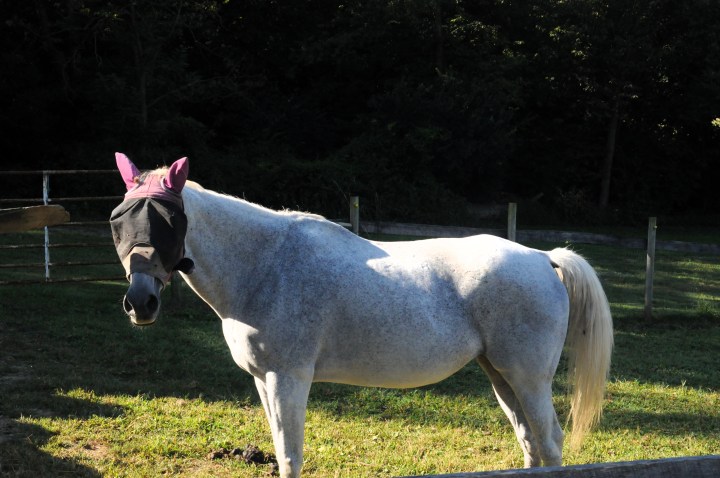
The barn’s flagstone floor is most likely original, I believe. Whatever the case, the space now serves as an outdoor wedding venue. And what is an outdoor wedding venue without stables and horses. We said hey briefly before we climbed back into the car and continued north to Vermont, which is where I sit now and write these words, in my erstwhile home state. Less enchanting to me than it is to other visitors, I suspect, and too soon for foliage here. But it is cool and sunny and our time has been well spent.
I hope to dispatch more soon from the road.
 Carolina Thinklings
One thought on “Travelogue: We Three Land in Carlisle”